
09 Jun Essence of Dog? No way!
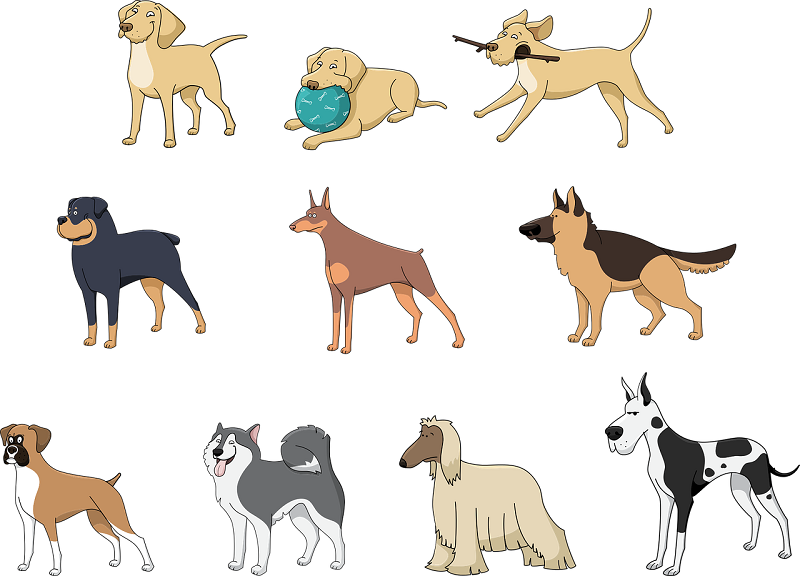
I love dogs. How they are with each other and with humans intrigues and amuses me endlessly. Maybe if I lived in the country or the suburbs I wouldn’t see so much of this, but in a city with a million dogs I probably run into a hundred dogs a day. (I had a dog during my twenties and thirties – who was of course the best dog in the world – and there are now two canines in my life, collectively owned, so my dog interaction is higher than the average NewYorker’s.)
One thing my dog fascination does is reinforce my non-belief in essences. When I look at dogs, it’s impossible to see any one thing that’s common to all (think chihuahua, Newfoundland and Basset hound, for example). I see, instead, almost endless ways they are related.
I think dogs display beautifully what Wittgenstein called family resemblances – “a complicated network of similarities overlapping and criss-crossing: sometimes overall similarities, sometimes similarities of detail” (Wittgenstein, 1953, para 66) –which overlap and criss-cross in the same way as “the various resemblances between members of a family: build, features, colour of eyes, gait, temperament, etc. etc.” (Wittgenstein, 1953, para 67).
Family resemblance was Wittgenstein’s response to the insistence that he must tell “what the essence of a language-game, and hence of language, is” (Wittgenstein, 1953, para 65).
Dogs are a delightful reminder to follow his advice and “look and see” what is common, in language and in life.
From my chapter, Performing a Life (Story), in Narrative Identities: Psychologists Engaged in Self-Construction, edited by George Yancy and Susan Hadley, 2005.
loisholzman
Posted at 22:10h, 10 JuneThanks, Louie!
Louie
Posted at 21:46h, 10 JuneHi, Lois!
Fred Newman, our colleague, your co-author, a very serious and creative activist and thinker also, as you know, loved word-play. He once commented on a compendium, “Essential Papers on Depression”, that a better title would have been “Depressing Papers on Essentialism.”
LOL, and Happy Birthday, Lois!