
09 Aug Do We Really Grow Up?
The garden metaphor is pervasive as a picture of human development. Children grow, it is said, from seeds. With the right kind of nurturing, they will ”flower” and “bloom.” Think kindergarten.
I like the metaphor for how it evokes a unified process—the person-environment interface, rather than person on the one hand and environment on the other. And also for how it disrupts/plays with the usual nature-nurture (inner-outer) dichotomy by attributing a nurturing capacity to the environment (nature).
The garden metaphor also suggests upward growth. Trees get taller and branch out into the world. So do flowers. Children get taller and venture out into the world. Not by accident do we say that humans “grow up.”
There are, however, plants that don’t grow up. Some of these are cultivated and some grow wild. And they inspire a different picture of human development than the tree does. It’s a picture that seems “right” to me as a developmentalist.
The plants I’m speaking about are rhizomes. You may not know the word, but you know a rhizome or two when you see it or taste it. Turmeric is a rhizome, so is ginger, so is bamboo. A rhizome is a plant that doesn’t grow up like a tree does from a central place or from a central control center. It grows underground and horizontally. It grows decentralized and unsystematic. Its buds send up stems haphazardly, regenerating and growing new roots and shoots here and there, unplanned.
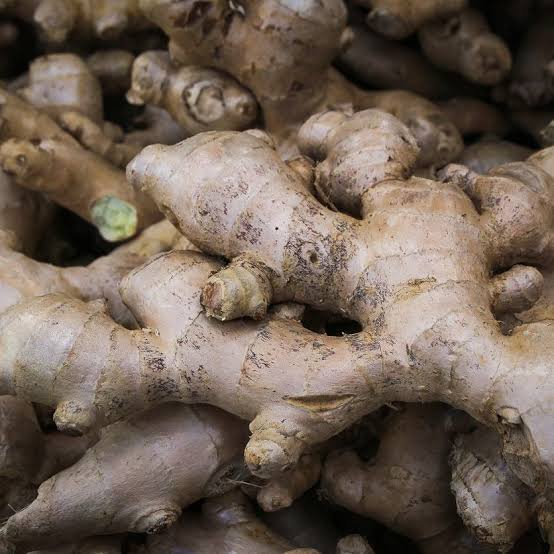
When I picture the process of human development as a growing rhizome, here’s what I see: 1000s and 1000s of experiences, relationships, ancestors, places—not bordered and bounded places, not here and there, not this identity or that one, but a tapestry of the where and the how and the who and the what of living our lives (usually called “growing up”).
My picture of the human activity of continuously developing as a social rhizome came into clear view when I watched the TED talk, “Don’t Ask Where I’m From, Ask Where I’m Local” by writer and photographer Taiye Selasi. Using her own experiences and those of friends and acquaintances, Taiye shares how she came to reject country as a fiction that hides our humanity, and national identity that places us in a box. She proposes that the honest response to being asked, “Where are you from?” is not nation state or city or village. It’s not a place at all. Others often describe her as multinational. She’s not. She says, “Nike is multinational; I’m human.” She, and all of us, are multi-local.
Our experience is where we’re from. And human experience, as Taiye describes it — “this notoriously and gloriously disorderly affair”—seems strikingly rhizomic. It’s all local, and locality “bespeaks humanity.”
In our troubled and turbulent times, marked as they are by identity-based politics and polarization, seeing ourselves and others as the mass and the mess of where, how and with whom we’ve “been local” shifts the gaze, and just might shift the conversation.
(I loved Taiye’s talk. I think you will too.)
loisholzman
Posted at 21:00h, 10 AugustLove it, Luke!
Creating metaphors is a lovely thing to do with words.
Luke Perone`
Posted at 19:21h, 10 AugustGreat post. Thanks for sharing and connecting us to the TED talk. In my college class on cultural approaches to human development, we create metaphors for development that move beyond a common US-centric and competitive metaphor of “development is a racetrack.” New metaphors like “development is a dance,” “development is a garden,” or “development is a tree” often emerge from this activity. I look forward to sharing the metaphor of “development is a growing rhizome” in future performances of this course.